 PawAtlas
Lesser vasa parrot
The Lesser vasa parrot profile places it in the Pet birds collection. The origin or distribution listed here is Madagascar. The scientific name recorded here is Coracopsis nigra. Start with the concrete details of Lesser vasa parrot: its name, group, measurements and notes. Read beside them, the practical guidance explains how those details show up in ordinary care for companion bird. The useful habit with companion bird records is to read the name, measurements and notes together. In Lesser vasa parrot, each filled field adds a little more shape to the entry.
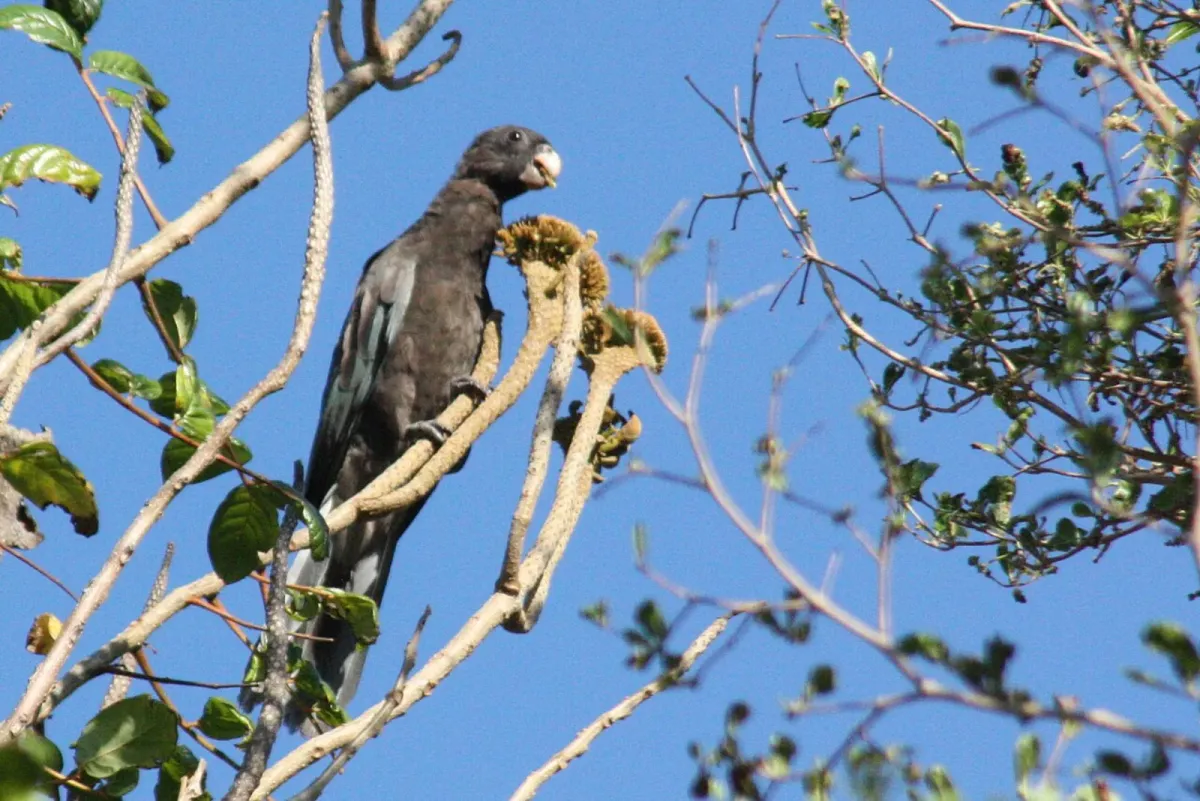
Overview
Lesser vasa parrot belongs to the Pet birds collection. Its recorded name, measurements and notes provide the starting point, while the sections below put them into everyday context. The scientific name recorded here is Coracopsis nigra. The origin or distribution listed here is Madagascar.
Start with the concrete details of Lesser vasa parrot: its name, group, measurements and notes. Read beside them, the practical guidance explains how those details show up in ordinary care for companion bird.
For a reader comparing companion bird records, Lesser vasa parrot is easiest to place by starting with the facts that are actually present and then reading the practical context around them.
Appearance
A bird such as Lesser vasa parrot is usually identified through its size, plumage and the shape of the body. Colour descriptions often cover a recognised variety, while individual birds may show small differences in tone or markings.
A useful visual portrait is built from several small observations rather than one impressive measurement. Look at scale first, then at coat or plumage, colour, body outline and any distinctive structures recorded for Lesser vasa parrot. Together they make a clear comparison point for companion bird entries without describing every individual in the same terms.
The visual details of Lesser vasa parrot are most useful when they are allowed to sit side by side. A colour, coat or body measurement is a clue; the combination is what gives the entry its character.
Behaviour and temperament
Companion birds spend their day moving between feeding, calling, resting and social contact. The way Lesser vasa parrot behaves will depend on its species, age and surroundings, with enough room and predictable routines making observation easier.
Behaviour is best understood as a pattern over time. The same companion bird may be quiet in one setting and alert in another, depending on age, handling, social company and the amount of control it has over its surroundings. For Lesser vasa parrot, the notes here are a framework for observation rather than a promise that every individual will behave alike.
What matters in daily life is not a single first impression but the rhythm of feeding, resting, moving and responding. That rhythm is the part a keeper can actually observe in Lesser vasa parrot.
Living environment
The distribution attached to Lesser vasa parrot gives context about the kind of landscape associated with the bird. In captivity, that context becomes practical through daylight, ventilation, perches, bathing opportunities and a clean, safe enclosure.
The word “habitat” covers two different questions. Origin tells us where a line or species is associated with; living conditions describe what must be arranged in the present day. For Lesser vasa parrot, keeping those questions separate makes the record more useful. It prevents a place name from being mistaken for a complete enclosure or aquarium specification.
A place name is valuable background, yet it does not tell a keeper how to arrange the present environment. That is why the record separates distribution from the practical conditions around Lesser vasa parrot.
Diet
A bird's diet needs a dependable staple, clean water and food variety suited to the species. For Lesser vasa parrot, the catalogue is not being used to invent a special recipe; the practical task is to watch appetite, droppings and body condition as part of ordinary care.
Feeding is most informative when it can be watched and adjusted. Appetite, pace, leftovers, body condition and the response to a routine tell a keeper more than a colourful list of foods. The companion bird context around Lesser vasa parrot is therefore practical rather than theatrical: start with what is recorded, then let the animal's response guide ordinary decisions.
Food is part of the animal's whole routine, not a decorative list. The record for Lesser vasa parrot is therefore useful when it helps a keeper notice what is eaten, what is left and what changes over time.
Daily care
The daily routine for Lesser vasa parrot includes clean food and water, safe perches, fresh air without draughts and time away from a dirty cage floor. Feather condition and changes in voice, appetite or activity are useful observations, but the record does not attach a disease list to the name.
Good care rarely comes from one dramatic intervention. It comes from the repeated jobs that keep a living space clean, predictable and easy to inspect. For Lesser vasa parrot, the visible fields point to the parts of that routine most likely to need attention, while the surrounding guidance keeps the work grounded in everyday handling rather than in a generic difficulty badge.
Most of the work around Lesser vasa parrot is likely to happen in quiet moments: replacing water, cleaning a surface, checking a coat or noticing that a familiar movement has changed.
Activity and enrichment
A bird like Lesser vasa parrot benefits from a daily rhythm that includes movement, safe climbing or flight space where possible, and contact that does not become forced handling. Perches of different textures and a little novelty can make the enclosure more usable.
Activity is not the same as keeping an animal busy every minute. A healthy rhythm includes movement, exploration, social contact and recovery. The right balance for Lesser vasa parrot depends on body size, age, temperament and the space available. Small changes are easier to judge than a complete rearrangement of the home or enclosure.
A good activity plan leaves the animal something to choose and somewhere to settle afterwards. For Lesser vasa parrot, the useful measure is how the day feels and functions, not how busy it looks from outside.
Health
For Lesser vasa parrot, regular observation matters because birds can hide weakness until a change is clear. Appetite, droppings, breathing, posture, feather condition and activity are useful everyday markers. Any persistent change belongs with an avian veterinarian rather than a catalogue guess.
A useful health record begins before there is a problem. Note what normal appetite, movement, breathing, body condition and rest look like, then pay attention when that baseline shifts. This is especially important for companion bird, because a catalogue entry can offer context but cannot examine Lesser vasa parrot, interpret symptoms or replace veterinary care.
A catalogue can mark context, but health is seen in the individual in front of you. For Lesser vasa parrot, the practical value of this section is learning what to notice early and when to seek help.
Breeding
A bird's breeding cycle is influenced by season, light, nutrition, pair compatibility and nesting conditions. Where this record gives no clutch or breeding value for Lesser vasa parrot, it is better to leave that detail unclaimed than to present a generic number as fact.
Reproduction is more than a number beside a species name. Timing, maturity, compatible adults, nutrition, space and the welfare of the young all affect the outcome. Where the record gives a litter, clutch or lifespan value for Lesser vasa parrot, it is shown as a reference. Where it does not, the page leaves the question open.
When a number is missing, the quiet space around it matters. For Lesser vasa parrot, leaving the question open is better than borrowing a figure from another population.
Life cycle
Birds move through juvenile, mature and older stages with changes in plumage, voice, activity and diet. The lifespan value for Lesser vasa parrot, when present, is a catalogue guide rather than a fixed endpoint; care should follow the individual stage.
The needs of a young animal are not simply a smaller version of adult care. Growth changes appetite, movement, social tolerance and the amount of room required. As Lesser vasa parrot ages, the same details remain worth watching from a different angle. The catalogue values provide anchors, while the individual life stage determines the daily routine.
A lifespan figure is a horizon, not a schedule. The day-to-day story of Lesser vasa parrot is written through gradual changes in body condition, appetite, movement and tolerance.
Care difficulty
Keeping Lesser vasa parrot well means planning for daily cleaning, safe enclosure design, social contact, noise and access to appropriate veterinary care. Difficulty is therefore a household question as much as a species question, and the page avoids reducing it to a single score.
A single care rating would hide the useful part of the decision. The real questions are concrete: how much space is available, how often can cleaning and observation happen, what equipment is needed, and what happens when the animal is ill or the household schedule changes? Those questions are more revealing for Lesser vasa parrot than a label such as easy or hard.
The honest way to judge Lesser vasa parrot is to look at the routine before bringing the animal home: who will clean, observe, feed, exercise or manage the environment, and how reliably can that happen?
History and origin
A bird's origin and conservation field place Lesser vasa parrot in a broader story of distribution, domestication or protection. Those fields are kept separate from everyday care so that historical context is not mistaken for a behavioural promise.
Names carry more history than they first appear to. An alias may preserve an older trade name, an origin may point to a regional population, and a scientific name can place a record inside a wider classification. Taken together, these fields give Lesser vasa parrot a traceable place in the companion bird catalogue without pretending that one page contains a complete history.
A short catalogue entry can preserve the outline of a history without claiming to be the whole archive. That is the role of the historical fields attached to Lesser vasa parrot.
Frequently asked questions
These questions cover the points that usually matter first: size, background, daily care and identification. For Lesser vasa parrot, the answers pair the listed details with practical context and leave a gap open when the profile does not give a value.
A useful FAQ gives a direct answer without making the profile sound more certain than it is. For Lesser vasa parrot, each answer separates the stated detail from the care principle that surrounds it.
What size or measurements are recorded for Lesser vasa parrot?
No body measurement is listed for Lesser vasa parrot. That does not mean the animal has no typical size; it means the available profile cannot support a precise figure. Plan the space around the individual in front of you, with enough room for normal movement and a comfortable resting place.
What background or distribution is recorded for Lesser vasa parrot?
The profile places Lesser vasa parrot in Madagascar. For a bird, it gives context about landscape and seasonal rhythm, while the enclosure still needs to be arranged for the individual bird in front of you. Distribution, domestication and everyday housing are related questions, but they are not the same question. Use the location as background and judge the present environment by the animal's behaviour, condition and safety.
What should be prepared before keeping Lesser vasa parrot?
The profile does not list a specific care or compatibility value for Lesser vasa parrot. Start with the ordinary requirements of the animal's group: a clean and safe living space, appropriate food and water, room to move, daily observation and access to a suitable veterinarian. Add breed-specific detail only when it can be confirmed.
Which names or background details help identify Lesser vasa parrot?
The identifying details for Lesser vasa parrot are Scientific name: Coracopsis nigra; IUCN status: LC — Least Concern. An alias can explain how the animal has been known, while a scientific name or wild ancestor places it in a wider classification. These clues help distinguish the entry, but they do not by themselves prove a complete origin story or predict an individual's behaviour.
References and record notes
A useful reference stays close to the details in front of the reader. For Lesser vasa parrot, the filled fields give the outline, and the surrounding prose gives it practical meaning.
A useful reference stays close to the details a reader can see. For Lesser vasa parrot, the surrounding sections explain how the information fits together for companion bird.
Names, measurements and notes are most useful when read together. For this entry, the filled fields provide the fixed points, while the sections around them explain the practical questions that follow. A blank field is left open for confirmation.