 PawAtlas
Saddled bichir
The Saddled bichir profile describes an ornamental fish. The aquarium values listed here include Water temperature 22–27 °C (72–81 °F), pH 6-8. Start with the concrete details of Saddled bichir: its name, group, measurements and notes. Read beside them, the practical guidance explains how those details show up in ordinary care for ornamental fish. The useful habit with ornamental fish records is to read the name, measurements and notes together. In Saddled bichir, each filled field adds a little more shape to the entry.
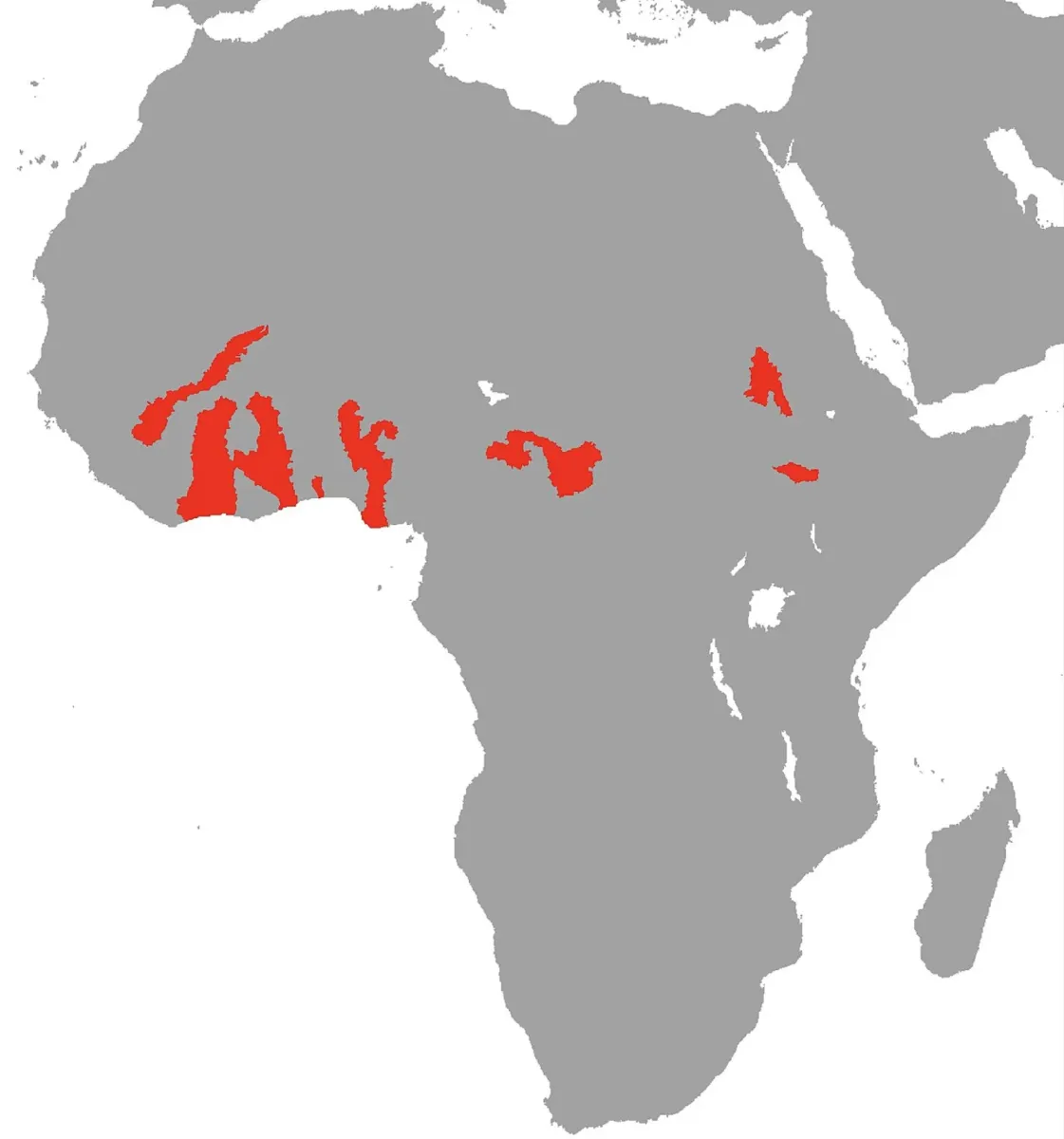
Overview
Saddled bichir belongs to the Ornamental fish collection. Its recorded name, measurements and notes provide the starting point, while the sections below put them into everyday context. The scientific name recorded here is Polypterus endlicherii.
Start with the concrete details of Saddled bichir: its name, group, measurements and notes. Read beside them, the practical guidance explains how those details show up in ordinary care for ornamental fish.
For a reader comparing ornamental fish records, Saddled bichir is easiest to place by starting with the facts that are actually present and then reading the practical context around them.
Appearance
With Saddled bichir, length, body outline and colour pattern work together. Ornamental fish can look different as they mature, so the recorded size is best read as a catalogue range or reference point rather than a promise about every specimen.
A useful visual portrait is built from several small observations rather than one impressive measurement. Look at scale first, then at coat or plumage, colour, body outline and any distinctive structures recorded for Saddled bichir. Together they make a clear comparison point for ornamental fish entries without describing every individual in the same terms.
The visual details of Saddled bichir are most useful when they are allowed to sit side by side. A colour, coat or body measurement is a clue; the combination is what gives the entry its character.
Behaviour and temperament
Fish behaviour is closely tied to space, cover, water movement and the presence of other animals. For Saddled bichir, the aquarium fields are therefore more useful than a simple temperament label: they show the setting in which normal movement and feeding can be considered.
Behaviour is best understood as a pattern over time. The same ornamental fish may be quiet in one setting and alert in another, depending on age, handling, social company and the amount of control it has over its surroundings. For Saddled bichir, the notes here are a framework for observation rather than a promise that every individual will behave alike.
What matters in daily life is not a single first impression but the rhythm of feeding, resting, moving and responding. That rhythm is the part a keeper can actually observe in Saddled bichir.
Living environment
An aquarium record needs to be read as a set of connected conditions. Temperature, pH, hardness, tank volume and reef compatibility affect the setting together; a single number should not be treated as a complete husbandry plan for Saddled bichir.
The word “habitat” covers two different questions. Origin tells us where a line or species is associated with; living conditions describe what must be arranged in the present day. For Saddled bichir, keeping those questions separate makes the record more useful. It prevents a place name from being mistaken for a complete enclosure or aquarium specification.
A place name is valuable background, yet it does not tell a keeper how to arrange the present environment. That is why the record separates distribution from the practical conditions around Saddled bichir.
Diet
Ornamental fish such as Saddled bichir should be approached through feeding behaviour, mouth shape and the food already accepted in the aquarium. Small portions, observation and the removal of uneaten food are more useful than a generic feeding promise when the row gives no detailed menu.
Feeding is most informative when it can be watched and adjusted. Appetite, pace, leftovers, body condition and the response to a routine tell a keeper more than a colourful list of foods. The ornamental fish context around Saddled bichir is therefore practical rather than theatrical: start with what is recorded, then let the animal's response guide ordinary decisions.
Food is part of the animal's whole routine, not a decorative list. The record for Saddled bichir is therefore useful when it helps a keeper notice what is eaten, what is left and what changes over time.
Daily care
For Saddled bichir, care begins with stable water rather than decoration. Test the relevant parameters, keep equipment working, remove waste and introduce changes gradually. Reef compatibility, when recorded, should be read as a caution about tank-mates and invertebrates, not as a complete stocking list.
Good care rarely comes from one dramatic intervention. It comes from the repeated jobs that keep a living space clean, predictable and easy to inspect. For Saddled bichir, the visible fields point to the parts of that routine most likely to need attention, while the surrounding guidance keeps the work grounded in everyday handling rather than in a generic difficulty badge.
Most of the work around Saddled bichir is likely to happen in quiet moments: replacing water, cleaning a surface, checking a coat or noticing that a familiar movement has changed.
Activity and enrichment
For Saddled bichir, enrichment is mostly environmental: open swimming room, suitable cover, a sensible current and compatible tank-mates. Changing the whole aquarium at once can be more disruptive than helpful, so small, observable adjustments are easier to evaluate.
Activity is not the same as keeping an animal busy every minute. A healthy rhythm includes movement, exploration, social contact and recovery. The right balance for Saddled bichir depends on body size, age, temperament and the space available. Small changes are easier to judge than a complete rearrangement of the home or enclosure.
A good activity plan leaves the animal something to choose and somewhere to settle afterwards. For Saddled bichir, the useful measure is how the day feels and functions, not how busy it looks from outside.
Health
In an aquarium, health is closely connected to water quality and the pace of change. Watch breathing, swimming, colour, appetite and interaction with tank-mates. A caution in the record is kept visible, while missing fields are not converted into a risk score for Saddled bichir.
A useful health record begins before there is a problem. Note what normal appetite, movement, breathing, body condition and rest look like, then pay attention when that baseline shifts. This is especially important for ornamental fish, because a catalogue entry can offer context but cannot examine Saddled bichir, interpret symptoms or replace veterinary care.
A catalogue can mark context, but health is seen in the individual in front of you. For Saddled bichir, the practical value of this section is learning what to notice early and when to seek help.
Breeding
For Saddled bichir, breeding depends on mature condition, compatible adults, water stability and a place for eggs or young to survive. The catalogue may not contain a clutch or spawning figure, so the absence of one is kept as an open field rather than filled with a guess.
Reproduction is more than a number beside a species name. Timing, maturity, compatible adults, nutrition, space and the welfare of the young all affect the outcome. Where the record gives a litter, clutch or lifespan value for Saddled bichir, it is shown as a reference. Where it does not, the page leaves the question open.
When a number is missing, the quiet space around it matters. For Saddled bichir, leaving the question open is better than borrowing a figure from another population.
Life cycle
A fish changes in scale, colour and social confidence as it grows. The adult length and any lifespan value listed for Saddled bichir give the page an anchor, while the day-to-day needs still depend on water stability and the actual stage of the fish.
The needs of a young animal are not simply a smaller version of adult care. Growth changes appetite, movement, social tolerance and the amount of room required. As Saddled bichir ages, the same details remain worth watching from a different angle. The catalogue values provide anchors, while the individual life stage determines the daily routine.
A lifespan figure is a horizon, not a schedule. The day-to-day story of Saddled bichir is written through gradual changes in body condition, appetite, movement and tolerance.
Care difficulty
The practical difficulty of keeping Saddled bichir depends on water stability, tank volume, compatibility and feeding behaviour. The parameters recorded here help identify the questions to answer before purchase, but they are not a substitute for a complete stocking plan.
A single care rating would hide the useful part of the decision. The real questions are concrete: how much space is available, how often can cleaning and observation happen, what equipment is needed, and what happens when the animal is ill or the household schedule changes? Those questions are more revealing for Saddled bichir than a label such as easy or hard.
The honest way to judge Saddled bichir is to look at the routine before bringing the animal home: who will clean, observe, feed, exercise or manage the environment, and how reliably can that happen?
History and origin
For Saddled bichir, the name and any recorded distribution connect the aquarium entry to a wider natural-history context. The useful distinction is between a catalogue label and a full species account; this page keeps to the former and adds readable husbandry context around it.
Names carry more history than they first appear to. An alias may preserve an older trade name, an origin may point to a regional population, and a scientific name can place a record inside a wider classification. Taken together, these fields give Saddled bichir a traceable place in the ornamental fish catalogue without pretending that one page contains a complete history.
A short catalogue entry can preserve the outline of a history without claiming to be the whole archive. That is the role of the historical fields attached to Saddled bichir.
Frequently asked questions
These questions cover the points that usually matter first: size, background, daily care and identification. For Saddled bichir, the answers pair the listed details with practical context and leave a gap open when the profile does not give a value.
A useful FAQ gives a direct answer without making the profile sound more certain than it is. For Saddled bichir, each answer separates the stated detail from the care principle that surrounds it.
What size or measurements are recorded for Saddled bichir?
Saddled bichir is listed with Body length / size: 63 cm (25 in). These are useful reference points, not a promise that every individual will mature at exactly the same size. For an aquarium fish, the figure helps with swimming room, cover and the space shared with tank-mates. Body condition and the animal's actual development still matter more than a single number.
What background or distribution is recorded for Saddled bichir?
No origin or distribution is listed for Saddled bichir. The missing location should be left open rather than replaced with a guess. It also means that the page cannot use geography to justify a specific temperature, enclosure or seasonal routine.
What should be prepared before keeping Saddled bichir?
The care-related details for Saddled bichir include Water temperature: 22–27 °C (72–81 °F); pH: 6-8. They are starting points for the routine, not a complete shopping list or a guarantee of compatibility. Before keeping it, make sure the aquarium can hold stable water, working filtration, suitable cover and compatible tank-mates. Changes should be gradual, and breathing, appetite, colour and swimming should be watched after any adjustment.
Which names or background details help identify Saddled bichir?
The identifying details for Saddled bichir are Scientific name: Polypterus endlicherii. An alias can explain how the animal has been known, while a scientific name or wild ancestor places it in a wider classification. These clues help distinguish the entry, but they do not by themselves prove a complete origin story or predict an individual's behaviour.
References and record notes
A useful reference stays close to the details in front of the reader. For Saddled bichir, the filled fields give the outline, and the surrounding prose gives it practical meaning.
A useful reference stays close to the details a reader can see. For Saddled bichir, the surrounding sections explain how the information fits together for ornamental fish.
Names, measurements and notes are most useful when read together. For this entry, the filled fields provide the fixed points, while the sections around them explain the practical questions that follow. A blank field is left open for confirmation.
Source note
Peaceful but preys on anything smaller than its mouth